
Leftover Porridge Bread - Seeded Wholemeal Loaf
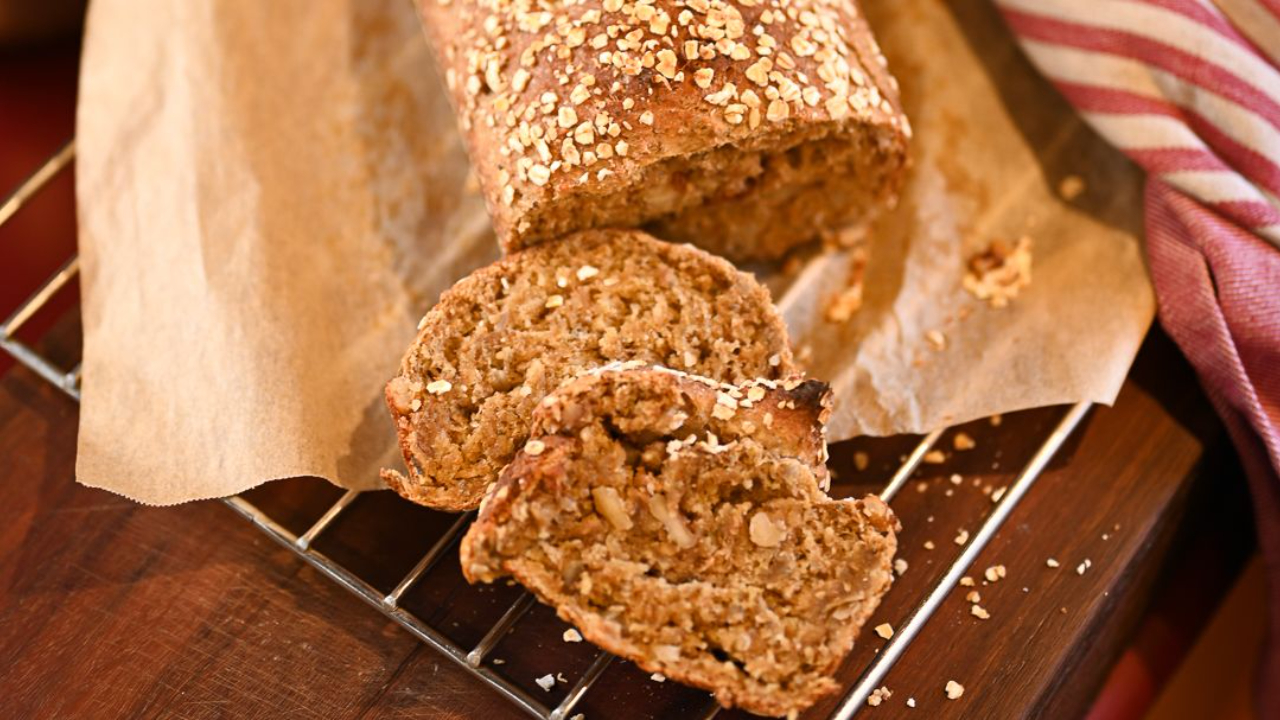
Do you ever make porridge and end up with a bit left over sitting in the pot, wondering what on earth to do with it? Well THIS is what you do with it. This seeded porridge loaf is one of the most satisfying, hearty and delicious loaves you will ever pull out of the oven, with sunflower seeds, walnuts and chia throughout and a gorgeous dark crust from the black treacle. Zero waste, MAXIMUM deliciousness. Let's bake!
Why This Porridge Bread Works
Cooked oats hold an enormous amount of moisture, and folding them into the dough is what gives this loaf its tender crumb.
That moisture also means the bread stays fresh noticeably longer than a standard loaf, so a small loaf goes further than you would expect.
The black treacle does two jobs. It brings the slight bitterness that stops the loaf tasting sweet, and it gives the crust its dark colour.
Sunflower seeds, walnuts and chia are kneaded in halfway through rather than at the start, so they distribute evenly instead of tearing the gluten as it develops.
And it is a genuinely zero waste bake. Yesterday's breakfast becomes today's bread, which is the whole point.
Recipe Details
- Prep Time: 20 minutes
- Prove Time: 2.5 to 3 hours
- Cook Time: 30 to 32 minutes
- Total Time: Around 3.5 hours
- Makes: 1 small loaf
- Difficulty: Medium
- Special Equipment: Small loaf tin (450g/1lb, approximately 20 x 10cm), wire cooling rack
The magic of this loaf is in the porridge oats, and the thing to understand before you start is that no two batches of leftover porridge are the same. Yours might be drier or wetter than mine depending on how you made it in the first place, so treat the water as a guide rather than a rule. Because you mix the porridge into the liquid before it meets the flour, you get to feel it early. If that mixture seems very thick, add a touch more water there and then, and if the dough itself comes together dry, another 20ml or so will bring it back. The dough should still end up stickier than any bread dough you are used to, so resist the urge to keep adding flour. This is the part of bread making you only learn by doing it, and after a few loaves you will know from the feel of the dough whether it needs a little more water or a little less.
Ingredients
For the Dough:
- 150g cooked porridge oats, leftover and cooled
- 175g strong white bread flour
- 75g wholemeal bread flour
- 100ml warm water (around 38C)
- 7g dried fast-action yeast
- 1 tsp fine salt
- 1 tbsp black treacle
- 1 tbsp olive oil or neutral oil
For the Seeds:
- 30g sunflower seeds (plus a few extra to scatter on top)
- 30g walnuts, roughly chopped
- 15g chia seeds
How to Make Leftover Porridge Bread
- Activate the yeast: Dissolve the black treacle in the warm water (around 38C), then stir in the dried yeast. Leave for 5 to 8 minutes until it looks frothy and bubbly on top. This confirms your yeast is alive and active. If nothing happens after 8 minutes, your water may have been too hot or the yeast is past its best. Start again before going any further!
- Combine the flours and salt: In a large bowl, whisk together the strong white bread flour, wholemeal bread flour and fine salt. Make a well in the centre.
- Bring the dough together: Add the cooled porridge oats and olive oil to the yeast mixture and stir briefly to combine. This is your first chance to judge it, so if that mixture feels very thick, add a touch more water now. Pour it into the flour well and mix with a dough scraper or your hands until a shaggy dough forms. It will feel stickier than a standard bread dough and that is completely normal. If it comes together dry, add another 20ml or so of water. If it seems impossibly wet, add flour 1 tbsp at a time, but resist adding too much or you will lose that gorgeous moist crumb.
- Knead in the seeds: Turn the dough out onto a lightly floured surface and knead for 8 to 10 minutes until smooth and slightly tacky but not sticky. About halfway through, flatten the dough out, scatter over the sunflower seeds, chopped walnuts and chia seeds, then fold and continue kneading to distribute them evenly throughout the dough.
- First prove: Shape the dough into a ball, place in a lightly oiled bowl, cover with a damp tea towel or cling film, and leave in a warm spot until doubled in size. In a cool kitchen this can take 1.5 to 2 hours rather than the usual hour. Don't rush it. It is ready when it has clearly doubled and feels puffy and light.
- Shape and tin: Punch the dough down gently to knock back the air. Shape into an oval and place in a lightly greased small loaf tin (450g/1lb, approximately 20 x 10cm). Press it in gently so it fills the corners evenly. Scatter a few extra sunflower seeds over the top if you like.
- Second prove: Cover the tin loosely and leave to prove again until the dough has risen about 2 to 3cm above the rim of the tin. This will take 60 minutes to 1.5 hours depending on the temperature of your kitchen.
- Bake: Preheat your oven to 200C (180C fan / 400F / Gas Mark 6). Bake for 30 to 32 minutes until deep golden brown on top. To check it is done, tip it out of the tin and tap the base. It should sound hollow. If it doesn't, return it to the oven out of the tin and directly on the rack for a further 5 minutes.
- Cool completely: Transfer to a wire rack and leave to cool for at least 45 minutes before slicing. Cutting too early causes the crumb to compress and go gummy. It is absolutely worth the wait!
Why You'll Love This Recipe
- A brilliant use for leftover porridge: Turn yesterday's breakfast into today's bread. Zero waste and absolutely delicious.
- Incredibly moist and flavourful: The oats keep the crumb tender and the treacle adds gorgeous depth.
- Packed with goodness: Wholemeal flour, chia seeds, walnuts and sunflower seeds make this a seriously nutritious loaf.
- Keeps well: The moisture from the oats means this loaf stays fresh longer than most homemade breads.
- Deeply satisfying to make: There is nothing quite like pulling a beautiful dark seeded loaf out of the oven!
Chef's Tips for Porridge Bread
Don't panic about the sticky dough: This dough will feel stickier than any standard bread dough and that is entirely because of the oats. Resist adding lots of extra flour. A slightly tacky dough is exactly what you want for that moist, tender crumb.
Judge the porridge before it hits the flour: Every batch of leftover porridge is a little different depending on how it was made, so the water is a guide rather than a fixed amount. Mixing the porridge into the liquid first is what lets you feel that early. Thick mixture, add a touch more water. Dry dough, another 20ml or so. Reading a dough by feel is a skill that builds over time, and after a few loaves you will know without thinking about it.
Cool porridge works best: Make sure your leftover porridge is fully cooled before adding it to the dough. Hot porridge will kill the yeast before it has a chance to get started.
The treacle is important: Black treacle gives this loaf its beautiful dark colour and slightly bitter, malty depth of flavour. Don't skip it! Golden syrup or honey will work as a substitute but you will get a lighter, sweeter result.
Prove somewhere warm: In a cool kitchen the dough will take longer to prove. A good tip is to pop the bowl in your oven with just the light on, or in a warm spot near your fireplace or heater. The dough is ready when it has clearly doubled and springs back slowly when you poke it.
The hollow tap test: When you tap the bottom of the loaf it should sound distinctly hollow, like a drum. If it sounds dense and solid it needs more time in the oven. Pop it back in out of the tin for 5 more minutes.
Let it cool properly: I know it is incredibly tempting to slice into a warm loaf but please wait the full 45 minutes. The crumb is still setting as it cools and cutting too early will give you a gummy slice. Trust me I have done this SO many times!
Substitutions & Variations
- Black treacle: Golden syrup or honey can be used instead for a lighter, sweeter flavour and a paler crumb.
- Sunflower seeds: Pumpkin seeds work just as well.
- Walnuts: Swap for pecans, hazelnuts, or leave the nuts out entirely and increase the seeds.
- Chia seeds: Flaxseeds or sesame seeds are good alternatives.
- Wholemeal flour: Use all strong white bread flour if you don't have wholemeal. The loaf will be lighter in colour and flavour but still delicious.
- Add dried fruit: A handful of raisins or chopped dried apricots folded in with the seeds makes a lovely breakfast loaf.
Storage
Best eaten fresh: This loaf is at its best on the day it is baked, once it has cooled the full 45 minutes, when the crust is still crisp and the crumb is at its most tender.
Fridge: Not recommended. Bread goes stale considerably faster in the fridge than it does on the bench, so keep it at room temperature wrapped in a tea towel or in a bread bin for up to 3 days instead.
Freezer: Slice the cooled loaf and freeze in a sealed bag for up to 3 months. Take out slices as needed and toast them straight from frozen.
Avoid: Don't store it in a sealed plastic bag. It traps moisture against the crust and turns it soft and slightly soggy, which undoes the dark crisp crust you worked for.
Frequently Asked Questions
Can you use uncooked oats instead of cooked porridge in bread? No, the oats need to be cooked and cooled for this recipe. Uncooked oats will not hydrate properly in the dough and you will end up with a very different result. This one is specifically designed for leftover cooked porridge.
Why is my porridge bread dough so sticky? Because of the oats, and it is meant to be. This is a wetter dough than you are used to. Lightly flour your hands and your work surface rather than the dough, and resist adding lots of extra flour. A slightly tacky dough is exactly what gives this loaf its moist, tender crumb.
How much water does porridge bread dough need? It depends entirely on your porridge, which is why the water is a guide rather than a fixed number. Leftover porridge can be drier or wetter depending on how it was cooked in the first place. Judge it when you stir the porridge into the liquid, add a touch more water if that feels very thick, and if the dough still comes together dry, another 20ml or so will sort it.
Can you make porridge bread without a loaf tin? You can try shaping it into a round and baking on a lined tray, but the loaf tin gives the best shape and support for this particular dough. The tin also helps it rise upwards rather than spreading outwards.
Can you use sourdough starter instead of dried yeast in porridge bread? Yes. If you have an active sourdough starter, add about 100g of it and omit the dried yeast. The prove times will be longer and less predictable but the flavour will be incredible.
Can you double a porridge bread recipe? Yes. Double all the ingredients and bake in a larger 900g/2lb loaf tin. You may need to add an extra 5 to 10 minutes to the baking time. Check with the hollow tap test as always.
How long does homemade porridge bread keep? Around 3 days at room temperature, which is longer than most homemade breads because of all the moisture the oats bring. Wrap it in a tea towel or keep it in a bread bin, and freeze anything you will not get through.
Why is my loaf dense in the middle? Usually an under-prove or slicing it too early. In a cool kitchen the first prove can take 2 hours rather than 1, so go by how the dough looks rather than the clock, and give the baked loaf the full 45 minutes on the rack before it meets a knife.
What do you serve with porridge bread? Toasted with plenty of butter is hard to beat, and the malty treacle flavour is very good with sharp cheese or a fried egg. It also makes excellent toast under a poached egg for a weekend breakfast.
You Might Also Like
Traditional Rēwena Bread - Another incredible homemade loaf, this one built on a live potato starter.
Homemade Granola Clusters - Another brilliant way to use up oats and make something delicious for breakfast.
White Ciabatta Rolls - Once the bread baking bug hits there is no going back. These are your next challenge.
There is something particularly satisfying about a loaf that started life as the bit of porridge nobody wanted. The oats give it a crumb that stays soft for days, the treacle gives it that dark, malty crust, and the seeds and walnuts mean every slice has something to bite on. Make it once and you will start deliberately cooking too much porridge.
Enjoy!
Del x
A hearty seeded loaf that turns leftover porridge into the best toast in the house.
Join the Dishes with Del community.
Stay in the loop with new recipes, exciting announcements, anything to keep you away from the washing up!
No spam here. Just tasty recipes!
