
Tarka Dal
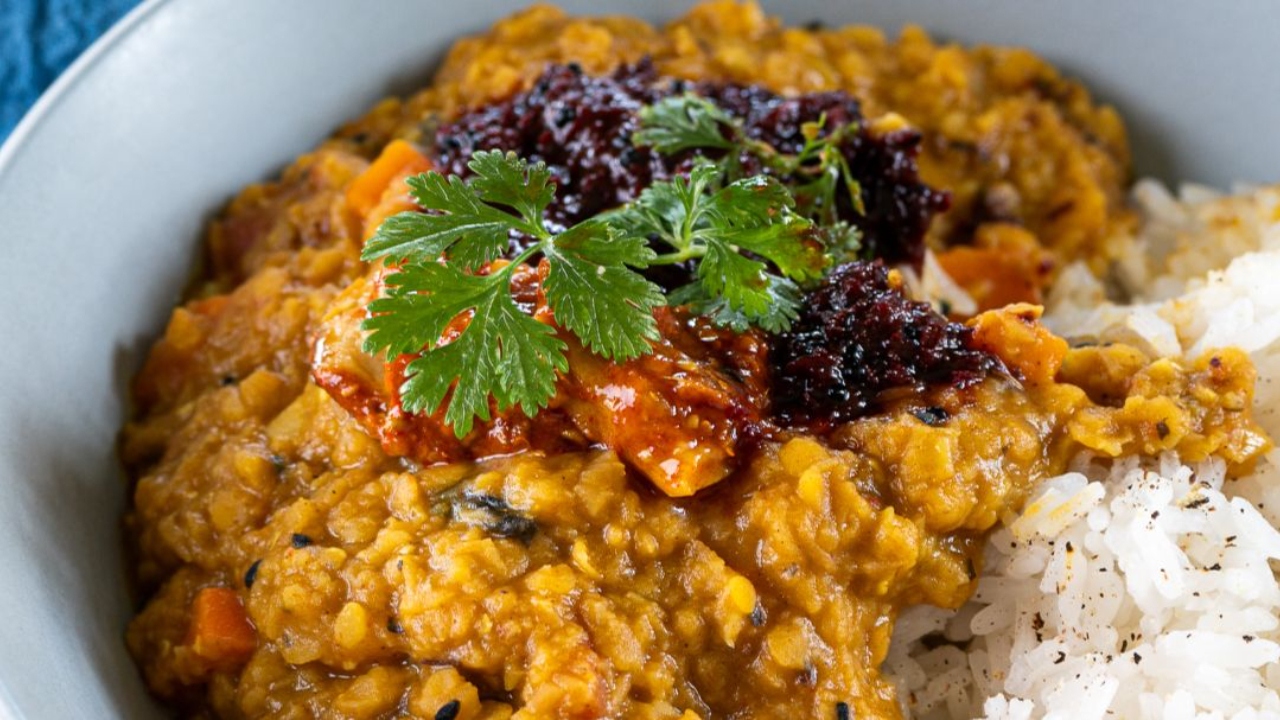
Tarka Dal
Dal is one of those things I come back to again and again, no matter what's in the fridge or what the weather's doing. It's warming, it's deeply satisfying, it's genuinely budget-friendly, and it is completely customisable. This tarka dal is made with split red lentils cooked down into a thick, fragrant, coconut-spiked curry base with whole spices, aromatics, and whatever vegetables you've got going spare. It's the kind of recipe that makes you look like you know what you're doing even when you're essentially just using up the odds and ends in the fridge. Honestly, it's one of my all-time favourite weeknight dinners. Let's get into it.
Watch me make this on YouTube!
Recipe Details
- Prep Time: 15 minutes
- Cook Time: 35 minutes
- Total Time: 50 minutes
- Serves: 2 as a main, or 4 to 6 as a side dish alongside other curries
- Difficulty: Easy
The key to a great dal is not rushing the aromatics at the beginning. The longer you sweat down the onion, garlic, and ginger over a low heat, the sweeter and more complex the base becomes. That foundation is what separates a good dal from an extraordinary one. Don't skip it, and don't hurry it.
Why You'll Love This Recipe
- One pot, minimal washing up: everything goes into a single pan and cooks down together.
- Fully customisable: no onion? Use a leek. No mushrooms? Leave them out. No stock? Water works beautifully. This is fridge-raid cooking at its best.
- Budget-friendly and filling: red lentils are one of the cheapest ingredients you can buy, and 300g feeds a family.
- Genuinely nutritious: packed with plant-based protein, fibre, and iron. Naturally gluten-free.
- Works as a main or a side: substantial enough to be dinner on its own with rice, or serve alongside other dishes for a full Indian feast.
- The spice blend is flexible: if you only have curry powder, use it generously and this will still be delicious. The whole spices are worth having if you can, but they're not essential.
Ingredients
For the Dal:
- 300g split red lentils
- 1 litre water (or vegetable stock for extra depth)
- 2 small cubes of butter (about 20g total)
- 1 teaspoon neutral oil, plus a little extra if needed
- 1 leek or onion, finely sliced or chopped (whichever you have)
- 4 to 5 cloves garlic, crushed and finely chopped
- 1 large knob of fresh ginger, peeled and finely diced
- 5 mushrooms, sliced (not too thin)
- 1 small carrot, cut into small chunks
- 1 large tomato (or 2 small), roughly chopped
- 2 tablespoons coconut powder (or half a can of coconut cream or coconut milk)
- Salt to taste
Whole Spices:
- 3 cardamom pods
- Small handful coriander seeds
- 1 tablespoon nigella seeds (also called onion seeds)
- Small piece of cinnamon stick or cassia bark
- Half a dried Kashmiri chilli (or any small dried chilli)
- Pinch of fenugreek seeds (optional, very small amount, it can be bitter)
Ground Spices:
- 1/2 teaspoon turmeric
- 1/2 teaspoon chilli powder
- 2 teaspoons curry powder (be generous)
To Serve:
- Steamed white rice or parathas
- Fresh coriander, if you have it
- Plum kasundi and lime pickle on the side
Instructions
- Get your mise en place ready: Before you turn on the heat, prep everything. Peel the ginger using the back of a spoon (it gets into all the grooves without wasting any). Finely dice it. Crush the garlic cloves flat with the back of your knife so the skins slip off easily, then chop finely. A pinch of salt rubbed into the chopped garlic helps break it down even further. Finely slice the leek or onion, slice the mushrooms, cut the carrot into small chunks, and roughly chop the tomato. Having everything prepped and ready before the heat goes on makes this dish a pleasure to cook.
- Sweat the aromatics: In a large pan or saucepan, heat the butter and oil over medium heat. Once the butter has melted, add the leek or onion, garlic, and ginger. Turn the heat to medium-low and cook gently for around 10 minutes, stirring occasionally. You want them to soften and become sweet. Don't rush this, you are building the foundation of the whole dish. If the heat is too high they will caramelise or burn, and that's not what you want here. Low and slow.
- Add the whole spices: Turn the heat down a little further and add all the whole spices: cardamom, coriander seeds, nigella seeds, cinnamon, dried chilli, and fenugreek if using. Cook for 1 to 2 minutes, stirring, so the oils in the spices start to release. It will smell incredible.
- Add the ground spices: Add the turmeric, chilli powder, and curry powder. Stir everything together and cook for 1 minute. If the pan looks a little dry, add another small splash of oil so the spices don't catch on the bottom.
- Add the vegetables: Add the mushrooms and carrot and stir them through the spiced base so they get coated in all that flavour. Cook for 1 minute. Don't worry if it looks a bit dry, that will change when the tomatoes go in.
- Add the tomato: Tip in the chopped tomato and stir through. The juice from the tomato will deglaze the pan and lift up any flavour from the bottom. Cook for another minute until the tomatoes start to break down.
- Add the lentils: Add the red lentils and stir so they are all coated in the spiced base. Let them cook and crackle for a minute or so in the pan before adding liquid, just like you would with a risotto. This helps them take on the flavour from the spices.
- Add the water and coconut: Pour in the litre of water (or vegetable stock). Add 2 tablespoons of coconut powder, or half a can of coconut cream or milk if that's what you have. Stir everything together. Bring to the boil, then reduce to a steady medium-low simmer.
- Cook and stir: Leave to cook for around 20 to 25 minutes, stirring occasionally. Pay more attention in the last 5 to 10 minutes when the lentils have absorbed most of the water and can start to stick to the bottom. If it's looking too thick before it's done, add a splash more water (around 100ml) and stir through.
- Season and serve: Taste and add salt, start with a good pinch and build from there. Salt is not optional in this dish. It brings all those spices to life. Serve over steamed rice or with warm parathas, and spoon plum kasundi and lime pickle alongside.
Chef's Tips
Mise en place saves you: Getting everything prepped before you turn on the heat means you cook calmly and nothing burns while you're still chopping. It's the single biggest habit that separates home cooks from professional ones.
Peel ginger with a spoon: The back of a teaspoon gets into all the knobby bits without losing any flesh. Much better than a peeler or a knife.
Sweat the aromatics slowly: This is not a step to rush. Ten minutes over a low heat brings out the natural sweetness of the onion and the deeper, more complex flavours in the garlic and ginger. Five minutes and they'll still be a bit sharp. Ten minutes and they're transformed.
Whole spices go in before ground spices: Whole spices need longer to release their oils. Ground spices only need a minute. Adding them in the right order means both cook properly and nothing gets bitter.
Be generous with spices: Everything you add after the spices (lentils, water, coconut) is going to dilute the flavour. Season more boldly than you think you need to at the spice stage. You can always balance it later, but you can't add depth back in once it's been diluted.
Don't cut the vegetables too small: This dal cooks for 30 to 35 minutes. If you cut your mushrooms and carrot very finely they'll disappear. Aim for slices and chunks that will hold some texture by the time it's done.
Substitutions & Variations
- No leek or onion? A shallot or even a bunch of spring onions (white parts) work fine here.
- No mushrooms or carrot? Leave them out. Or swap for whatever vegetables you have: spinach (stir in at the end), courgette, or frozen peas all work well.
- Want it vegan? Skip the butter and use a teaspoon of oil or a spoonful of coconut oil instead. For a more authentic flavour, ghee is wonderful here if you have it.
- No coconut powder? Use half a can of coconut cream for a richer, creamier dal, or half a can of coconut milk for something lighter. If you don't have any coconut at all, leave it out and add a little extra water.
- Only have curry powder? No problem. Use a generous 2 tablespoons and skip the individual whole and ground spices. It'll still be a great dal.
- Want it more substantial? Serve alongside Saag Halloumi for a full vegetarian Indian feast.
- No fresh tomato? Half a can of tinned chopped tomatoes works perfectly.
Storage
Fridge: Dal keeps beautifully in an airtight container in the fridge for up to 4 days. The flavour actually improves overnight as the spices continue to develop.
Reheat: Add a splash of water when reheating on the stovetop or in the microwave, as dal thickens considerably when cold.
Freeze: Dal freezes very well for up to 3 months. Portion into freezer bags or containers. Defrost overnight in the fridge and reheat gently with a splash of water.
Frequently Asked Questions
What is tarka dal?
Tarka dal is an Indian lentil dish where cooked lentils are combined with a "tarka" (sometimes spelled tadka), which is a base of spices bloomed in fat, usually butter, oil, or ghee. The tarka is the flavoured fat and spice mixture that gives the dal its depth and aroma.
What's the difference between tarka dal and regular dal?
Dal just means lentils in Hindi. Tarka dal specifically refers to the technique of cooking spices in fat and combining them with the lentils. Most dals you find in restaurants are tarka-style in some form.
Do I need to soak red lentils before cooking?
No. Split red lentils cook quickly without soaking and break down naturally into a thick, creamy consistency. Just rinse them in cold water before using.
What lentils are best for dal?
Split red lentils are the classic choice for tarka dal. They cook quickly (around 20 to 25 minutes) and break down into a thick, smooth base. Other lentils like green or black (beluga) lentils hold their shape and are better for different dishes.
Can I make this dal ahead of time?
Yes, and it's better the next day. Make it, let it cool, and store in the fridge. Reheat gently with a splash of water to loosen it back up.
What do you serve with tarka dal?
Steamed white rice is the classic pairing. Parathas or naan also work beautifully. A spoonful of kasundi, lime pickle, or mango chutney on the side makes it into something really special. Fresh coriander on top if you have it.
Can I make this vegan?
Yes. Swap the butter for oil or coconut oil. Everything else is already plant-based.
You Might Also Like
Saag Halloumi — Serve these two together and you've got a proper Indian feast at home. The creamy spinach and halloumi is the perfect partner to this dal.
Parathas — Flaky, buttery, and the best thing to scoop up a good dal with. So easy to make at home.
Plum Kasundi — An Indian-spiced plum condiment that is absolutely incredible spooned alongside this dal. Once you've made it you'll put it on everything.
This tarka dal is one of those recipes I'd make on repeat forever. It's warming, it's forgiving, it's genuinely good for you, and it tastes like you spent hours on it when really the hardest part is just being patient with the onions at the start. Make it once and it'll become a regular in your rotation.
Enjoy!
Del x
A fragrant, warming tarka dal made with split red lentils, whole spices, mushrooms, carrot, and a touch of coconut. One pot, fully customisable, and ready in under an hour.
Join the Dishes with Del community.
Stay in the loop with new recipes, exciting announcements, anything to keep you away from the washing up!
No spam here. Just tasty recipes!
