
Plum Kasundi - Indian Spiced Fruit Condiment Recipe
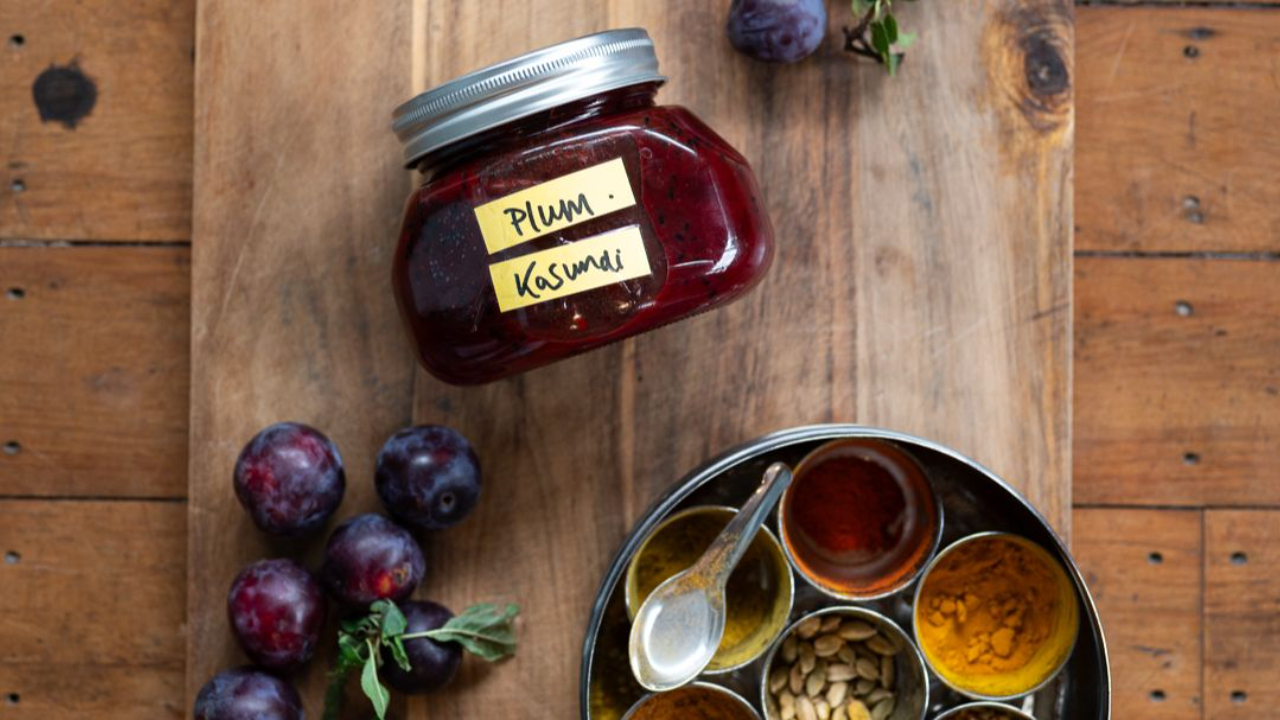
Plum kasundi is an Indian spiced fruit condiment and the best thing I know to do with a glut of plums. It is sweet, tangy, properly spiced, and it keeps in the cupboard for up to a year, so a bucket of summer fruit turns into jars you are still opening in winter. Once the plums are de-stoned, and that really is the hardest bit, the pot does the rest. Let's get into it!
Why This Plum Kasundi Works
Kasundi is traditionally a mango condiment. Plums do the same job beautifully, and unlike mangoes they turn up here by the bucketload every autumn.
A good friend here in New Zealand introduced me to kasundi, and I remember the very first time I ate it thinking wow, I need to make this. It took me around five years from that first taste to putting pen to paper and writing my own version down.
The whole spices get tempered in hot oil first. That one step is why this tastes like a proper Indian condiment rather than a sweet fruit chutney with some spice stirred through.
Sugar and vinegar do the preserving, not fermentation. Bottled hot into clean jars, it sits in a dark cupboard for a year without any special equipment.
Bruised and overripe fruit is not just acceptable here, it is ideal. The plums are going to collapse anyway, so the ones nobody wants are the ones you want.
It gets better with age. The spices are sharp and separate on day one and mellow into something rounder over the first few weeks in the jar.
Recipe Details
- Prep Time: 30 minutes (mostly de-stoning plums)
- Cook Time: 1 hour
- Total Time: 1 hour 30 minutes
- Makes: About 6 to 8 jars, depending on jar size
- Difficulty: Easy
- Special Equipment: Large heavy-bottomed pan, clean jars with lids
Kasundi is a traditional Indian condiment usually made with mangoes, and it works brilliantly with plums when they are abundant. The order of the cooking matters more than anything else in this recipe: whole spices into warm oil until they pop, then the onion, garlic and ginger, then the ground spices for a minute, and only then the fruit. Tempering like that pulls the flavour out of the seeds and blooms the ground spices in oil rather than boiling them in fruit juice, which is the difference between a kasundi and a jam with turmeric in it. Keep the heat low through the whole spice stage, because burnt mustard seeds turn the entire batch bitter and there is no rescuing it. After that it is an hour of low, steady cooking and regular stirring until the plums collapse into something thick and jammy, and it will thicken further as the jars cool. This is the sort of preserving that sits at the heart of my zero waste recipes for kitchen scraps, turning a seasonal glut into something worth having.
Ingredients
For the Kasundi:
- 1,800g plums, de-stoned (weighed after removing stones)
- 100ml vegetable oil
- 3 tablespoons mustard seeds
- 2 1/2 tablespoons cumin seeds
- 2 tablespoons onion seeds (nigella seeds/kalonji)
- 150g fresh ginger, grated (optional)
- 1 diced onion
- 3 large garlic cloves, grated
- 288g sugar (about 1 1/2 cups)
- 2 teaspoons ground turmeric
- 1/2 to 1 tablespoon ground chilli powder (adjust to your heat preference)
- Optional: chilli flakes for extra heat
- 360ml vinegar (whatever you have, white wine, apple cider, or malt all work)
- 1 1/2 tablespoons ground coriander
- 2 tablespoons salt
- 1 black cardamom pod (or 4 green cardamom pods)
- 2 star anise
How to Make Plum Kasundi
- De-stone the plums: This is the most time-consuming part! Cut your plums in half and remove the stones. Weigh them after de-stoning, you need 1,800g of prepared fruit. Save any plums that are a bit bruised or overripe for this, they're perfect for cooking down!
- Heat the oil and temper the whole spices: Add the vegetable oil to a large, heavy-bottomed pan over low to medium heat. Add the mustard seeds, cumin seeds, onion seeds (nigella), black cardamom pod, and star anise. Warm them gently until you can hear them popping and they smell fragrant. Keep the heat low, you don't want them to burn! This should take about 2 to 3 minutes.
- Add the onion, garlic (and ginger if using): Add in your diced onion, cook for a minute or two. Add the grated garlic to the warm, fragrant oil (and grated ginger if you're using it). Cook for about 1 minute, stirring constantly. It should smell really aromatic and wonderful! Don't let the garlic burn.
- Add the ground spices: Add the ground turmeric, ground chilli powder, ground coriander, and chilli flakes if using. Stir well and cook for another minute to toast the spices. The mixture should be beautifully fragrant now.
- Add everything else: Add the de-stoned plums, sugar, vinegar, and salt. Give it all a good stir.
- Cook low and slow: Turn the heat to low to medium and cook for about 1 hour, stirring regularly to prevent it catching and burning on the bottom. The plums will break down and become jammy and thick. Stir more frequently towards the end as it thickens.
- Check consistency: After about 40 minutes to an hour, the kasundi should be thick and jammy. Remember it will thicken even more as it cools, so don't worry if it seems a bit loose. The time depends on your plums: if they were very ripe they may be a little more juicy and you may want to cook it a little longer.
- Taste and adjust: Give it a taste! Does it need more salt? Adjust as needed. This is your chance to make it perfect for your palate.
- Bottle while hot: While the kasundi is still hot, ladle it into clean jars, filling them right to the top to minimise air. Immediately put the lids on tightly. The heat will create a vacuum seal as it cools.
- Cool and store: Let the jars cool completely at room temperature. Once cool, store in a cool, dark place. Once opened, keep in the fridge.
Why You'll Love This Recipe
- Uses abundant plums: Perfect when you've got loads from trees or neighbours
- Preserves for months: Enjoy summer plums all year round
- Sweet, tangy, and spicy: Complex flavours from aromatic spices
- Incredibly versatile: Goes with cheese, meats, curries, sandwiches, and more
- Waste less, save money: Uses seasonal fruit when it's plentiful and cheap, or free, and turns fruit that would rot on the ground into something you'd otherwise pay a lot for in a jar
- Uses imperfect fruit: Bruised, soft, or slightly overripe plums are exactly what this wants
- Flexible recipe: Adapt the spices to what you have
Chef's Tips for Plum Kasundi
De-stoning is the hardest part: Once that's done, the rest is easy. Put on some music or a podcast and work through those plums, and use the bruised and soft ones while you're at it because they cook down best.
Don't burn the spices: Keep the heat low when tempering the whole spices. Burnt spices taste bitter and there is no fixing a batch once the mustard seeds have caught, so pull the pan off the heat the moment they smell right.
Stir regularly, more so at the end: As it thickens it will catch on the bottom given half a chance, so stir more frequently through the last twenty minutes.
It thickens as it cools: Don't worry if it looks a bit thin in the pan. It firms up beautifully in the jar, so stopping while it still moves is the right call.
No ginger? No problem: I didn't have fresh ginger and left it out, and it was still delicious. You could use 1/2 teaspoon ground ginger instead if you want that flavour.
Clean jars, filled to the top: Your jars need to be clean and dry but don't need sterilising like jam jars, because you're filling them hot. Fill them right to the top, since less air in the jar means better preservation.
Substitutions & Variations
- Different fruit: This works with apricots, peaches, or even mangoes (traditional kasundi uses mangoes!)
- Vinegar options: Apple cider vinegar, white wine vinegar, or malt vinegar all work brilliantly
- More or less spice: Start with 1/2 tablespoon chilli powder and add more if you like it fiery, or leave it out completely for a mild version
- Add aromatics: Fresh curry leaves are a lovely addition if you have them
- Brown sugar: Use brown sugar instead of white for a deeper, caramel flavour
- Extra texture: Leave some plum chunks for a chunkier kasundi
- Green cardamom: If you don't have black cardamom, use 4 green cardamom pods instead
Storage
Best eaten fresh: This is the rare recipe where fresh is not best. Kasundi is perfectly good the day you make it, but the spices are sharp and separate at that stage and it is noticeably better after two or three weeks in the jar, once everything has mellowed and married together.
Fridge: Once a jar is opened, keep it in the fridge and use it within 3 months. Always use a clean, dry spoon.
Freezer: Not necessary given the long pantry life, but it freezes fine if you need it to. Freeze in small portions and use within 6 months, thawing in the fridge overnight.
Avoid: Don't leave an opened jar sitting out at room temperature, and never dip a damp or dirty spoon into it. Both introduce bacteria and will cut a year of shelf life down to weeks.
Frequently Asked Questions
What is plum kasundi? Kasundi is an Indian spiced condiment, traditionally made with mangoes and mustard, somewhere between a chutney and a relish. This version swaps in plums, which are far easier to come by in New Zealand, and keeps the mustard seeds, cumin, nigella and turmeric that make it taste unmistakably Indian.
Do you have to use exactly these spices in kasundi? No, the recipe is flexible and you should use what you have. The three that really matter are mustard seeds, cumin and turmeric, and those form the backbone of the flavour.
Can you use frozen plums for kasundi? Yes, frozen plums work brilliantly. There is no need to defrost them, just add them straight to the pan, though they may release a little more liquid so expect a slightly longer cook.
What can you do if you don't have fresh ginger? Leave it out. I didn't have any either and the kasundi was still delicious. If you want the flavour, half a teaspoon of ground ginger does the job.
Why is my kasundi too thin? Keep cooking it down, stirring regularly, and it will reduce and thicken. Remember it thickens considerably more as it cools, so stop while it still moves in the pan rather than cooking it to a paste.
Can you make plum kasundi less spicy? Absolutely. Start with half a tablespoon of chilli powder, skip the chilli flakes, or leave the chilli out entirely for a mild version that still tastes properly spiced from the seeds and turmeric.
What vinegar is best for kasundi? Any of them. I've used white wine vinegar, apple cider vinegar and malt vinegar and all three work well, so use whatever is in the cupboard.
Do you need to sterilise jars for kasundi? They need to be clean and dry, but because you are filling them piping hot and sealing immediately, you don't need to sterilise them the way you would for jam.
How long does plum kasundi keep? Up to 12 months unopened in a cool, dark cupboard, and 3 months in the fridge once opened. The sugar and vinegar do the preserving.
What do you serve plum kasundi with? Almost anything savoury. It is superb on a cheese board with sharp cheddar or brie, brilliant with cold ham or turkey, and it lifts any sandwich or wrap. Serve it as a side condiment with Indian food such as lentil tarka dal, spoon it alongside BBQ chicken, lamb chops or sausages, brush it over roasting vegetables as a glaze, or just put it on buttered toast. It is even very good with scrambled eggs.
You Might Also Like
Fruit Cheong (Korean Fermented Syrup) - Another brilliant way to preserve abundant seasonal fruit, this one using a simple fermentation method!
Beginner's Guide to Lacto Fermentation - More ways to preserve seasonal abundance using traditional fermentation methods. So satisfying!
Quick Green Tomato Chutney - Got a glut of green tomatoes? Turn them into this gorgeous, tangy chutney in just 15 minutes.
Plum kasundi is one of those recipes I come back to every single plum season. It takes about 30 minutes of active work, mostly de-stoning, then the pot does all the heavy lifting for an hour while your kitchen smells absolutely incredible. The finished kasundi is so much better than anything you'd buy in a shop: deeply spiced, sweet, tangy, and genuinely complex. Make a batch while plums are abundant and you'll be pulling jars out of the cupboard for months, giving some as gifts and adding a spoonful to everything. HONESTLY, make it. You will not regret it.
Enjoy!
Del x
Plum kasundi, an Indian spiced fruit condiment that turns a glut of plums into jars you'll still be opening in winter.
Join the Dishes with Del community.
Stay in the loop with new recipes, exciting announcements, anything to keep you away from the washing up!
No spam here. Just tasty recipes!