
Potato Bread from Leftover Mash
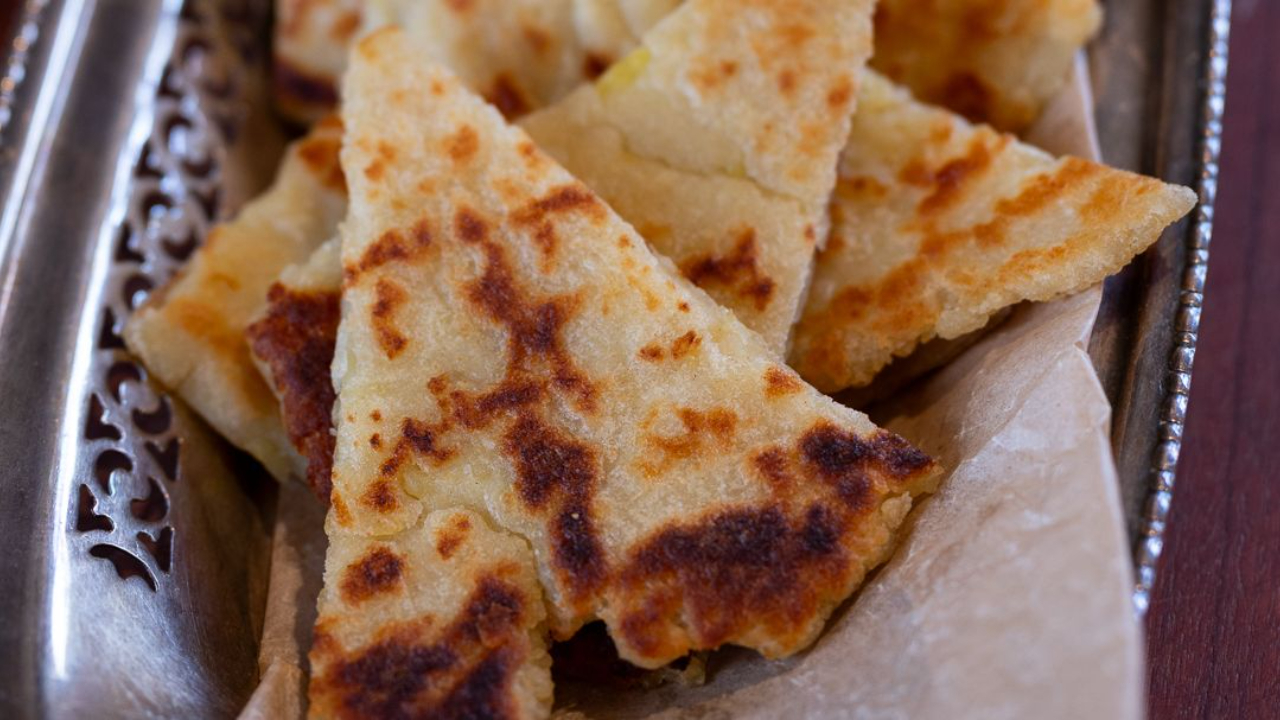
Leftover mash is the thing that sits in the fridge for three days and then goes in the bin. Not today. Four ingredients and ten minutes turn it into flatbreads that are crisp and golden outside, soft and almost pillowy inside, and honestly better than anything the mash was doing the first time round. Let's cook!
Why This Potato Bread Works
Cooked potato has already done the hard work. The starch is gelatinised and the moisture is locked in, which is what gives you a soft, tender crumb from a dough you barely have to knead.
There is no yeast and no proving. No waiting, no warm place, no second rise. Mix, knead briefly, roll and fry. Twenty minutes start to finish.
A dry pan is all it needs. No oven, no tray, no oil in the pan. It cooks like a pancake and blisters like a flatbread.
It takes whatever else is going spare. Sad spring onions, a handful of frozen spinach, the last of the cheese. All of it improves the bread and empties the fridge.
The mash does not need to be good. Leftover, cold, a bit claggy, seasoned from yesterday. All fine, and arguably better than fresh.
Recipe Details
- Prep Time: 10 minutes
- Cook Time: 10 minutes
- Total Time: 20 minutes
- Makes: 4 flatbreads
- Difficulty: Easy
- Special Equipment: None, just a dry frying pan
The ratio is the thing worth understanding, because it is the opposite of what people assume. This is a potato bread, not a bread with potato in it, so the mash is the bulk and the flour is only there to bind it. Roughly three parts mash to one part flour. If your leftover mash was made with a lot of butter or cream it will be wetter and want a little more flour, and if it was on the dry side you may need a splash of water. Go by feel rather than by the scales here. You are after a soft dough that just holds together and is still slightly tacky, not a firm bread dough. Overwork it or add too much flour and you lose the whole point of it, which is that texture somewhere between a pancake and gnocchi.
Ingredients
- 375g leftover mashed potato
- 112g plain flour, plus a little extra for rolling
- 16g butter, softened, or 1 tbsp vegetable oil
- Pinch of salt
- Optional: spring onions, spinach, grated cheese or leftover herbs
How to Make Potato Bread from Leftover Mash
- Get everything in one bowl. The mashed potato, flour, softened butter or oil, and a pinch of salt.
- Bring it to a dough. Work it together with your hands until it comes into a soft ball. If it feels too dry add a tiny splash of water, and if it is sticking to everything add a little more flour.
- Add your extras. Chopped spring onion, defrosted spinach squeezed dry, grated cheese or chopped herbs. Anything going spare in the fridge.
- Knead it briefly. Thirty seconds, just to bring it together evenly. This is not a bread dough and it does not want developing.
- Roll it out. Divide into 4 and roll or press each one into a round about 1cm thick, using a little flour so it does not stick.
- Fry in a dry pan. Medium heat, no oil. 3 to 4 minutes on each side, until golden, blistered and crisp.
- Butter them while hot. Rub a little butter over the top so it melts in and makes them glisten, then salt them.
- Cut and eat straight away. They are at their absolute best within about ten minutes of leaving the pan.
Why You'll Love This Recipe
- Four ingredients: Mash, flour, butter, salt
- No yeast, no proving: Twenty minutes from bowl to plate
- No oven needed: A dry frying pan does the whole job
- It rescues the mash: The thing most likely to be binned after a roast
- Takes anything you add to it: Cheese, herbs, spinach, spring onion
Chef's Tips for Potato Bread
Use cold mash straight from the fridge. It is firmer and easier to handle than warm mash, and it holds together better in the pan.
Do not add flour until it stops being sticky. A slightly tacky dough makes a soft bread. A dry, firm one makes a tough, floury disc. Err on the side of less flour.
Vegetable oil works in place of the butter. A tablespoon does exactly the same job, which is useful if you have no butter softened or you want to keep it dairy free. Use oil in the dough and skip the butter rub at the end.
Keep the pan dry and the heat medium. Too hot and the outside colours before the inside sets. Oil in the pan makes them greasy rather than blistered.
Squeeze frozen spinach properly. Any extra water goes into the dough and you will end up adding flour to compensate, which costs you the texture.
Butter them the moment they come out. It melts into the surface rather than sitting on it, and it is the difference between good and very good.
Substitutions & Variations
- No butter? A tablespoon of vegetable oil in the dough does the same job
- Cheese: Grated cheddar or the hard ends of anything in the fridge, worked through the dough
- Spring onion and spinach: The classic combination, and a good use for the freezer bag
- Herbs: Chopped chives, parsley stalks or the last of a bunch going yellow
- Spice it: A pinch of cumin or chilli flakes through the dough
- Kumara or other mash: Sweet potato, parsnip or swede mash all work, though wetter mashes need a little more flour
Storage
Best eaten fresh: Within ten minutes of the pan, while the outside is still crisp.
Fridge: Two days in an airtight container. Reheat in a dry pan for a minute a side to bring the crust back.
Freezer: Freeze cooked and cooled, layered with paper. Reheat from frozen in a dry pan over a low heat.
Avoid: The microwave. It steams them soft and you lose the crust entirely.
Frequently Asked Questions
Can I use fresh mash instead of leftover? Yes, but let it cool completely first. Warm mash makes a sticky dough that is unpleasant to handle and needs far more flour.
My mash has butter and cream in it, does that matter? Not at all, and it usually makes better bread. A richer mash is wetter, so expect to add a little more flour to bring it together.
Why is my dough so sticky? Wetter mash, most likely. Add flour a tablespoon at a time until it just stops sticking to your hands, and no further.
Why did mine come out tough? Too much flour, or too much kneading. This is not a bread dough. Thirty seconds of bringing it together is all it wants.
Can I make it dairy free? Yes. Use a tablespoon of vegetable oil in place of the butter, skip the butter rub at the end, and check your mash was not made with milk or butter.
Can I make the dough ahead? Yes, up to a day in the fridge, wrapped. Let it sit out for ten minutes before rolling so it is not fridge cold and cracking.
Do I need to oil the pan? No, and you should not. A dry pan is what gives you the blistered, crisp surface. Oil makes them greasy and stops them colouring properly.
What do I serve it with? Soup is the obvious one, and it is superb with a stew for mopping. Cut into wedges with dips, or with a fried egg for breakfast.
You Might Also Like
The Food Waste Banquet - The full trash to table feast this bread opened, with every recipe in it.
Fridge Raid Salad with Herb Stalk Dressing - The fresh, sharp thing to serve alongside it.
Veggie Peel Bhajis - More frying from the scraps drawer, from the same banquet.
Leftover Porridge Bread, Seeded Wholemeal Loaf - The other great bread made from a pan of leftovers.
Broccoli and Blue Cheese Soup - Make this to go with it. Quick, easy and del-icious.
Next time there is mash left in the pan, cover it and put it in the fridge rather than scraping it into the bin. Twenty minutes the following day and it comes back as something better than it was the first time.
Enjoy!
Del x
Crisp, golden flatbreads made from leftover mashed potato, with no yeast, no proving and no oven.
Join the Dishes with Del community.
Stay in the loop with new recipes, exciting announcements, anything to keep you away from the washing up!
No spam here. Just tasty recipes!