
Baileys Bread and Butter Pudding with Chocolate and Orange
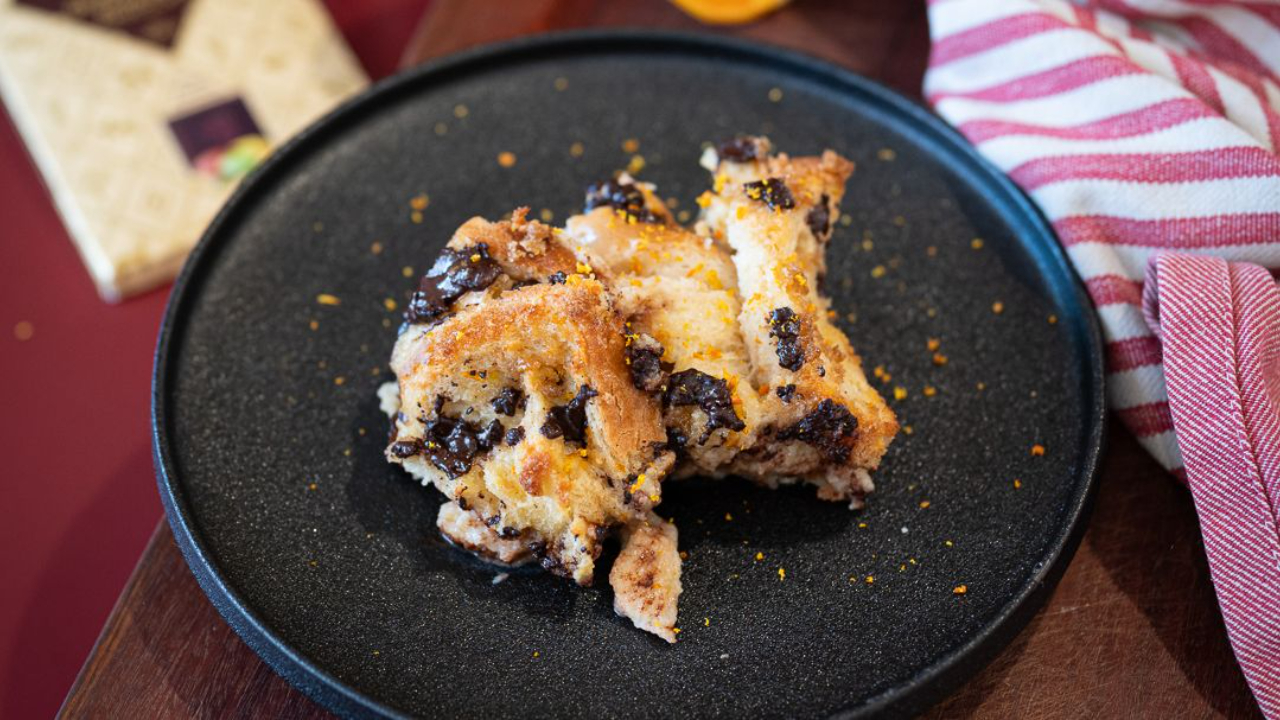
This Baileys bread and butter pudding with dark chocolate and orange turns stale bread into the most GORGEOUS winter dessert, and it costs almost nothing to make. That forgotten baguette, the crusty end of a sourdough loaf, the last two slices that went hard because someone left the bag open, all of it becomes something cosy, boozy and deeply indulgent. You get a golden, crunchy top, a soft custardy middle, and little pockets of melted dark chocolate the whole way through. Let's bake!
Why This Bread and Butter Pudding Works
This is a classic British bread and butter pudding built on a Baileys custard with dark chocolate and orange zest, ready in about an hour and ten minutes and serving six to eight.
The technique that makes it work is stale bread plus a proper soak. Bread that has dried out drinks up the custard and still holds its shape, where fresh bread turns straight to paste.
What makes my version different is the top. Instead of laying every slice flat, I pile the last of the bread on in rough, scrunched pieces so the peaks crisp and the valleys stay soaked.
We used to make a version of this at the Ivy in London, and it is still an absolute banger. Twenty years of professional kitchens later, it is the recipe I reach for whenever there is bread going hard on the bench.
Recipe Details
- Prep Time: 15 minutes plus 15 to 20 minutes soaking
- Cook Time: 30 to 35 minutes
- Total Time: 1 hour to 1 hour 10 minutes
- Serves: 6 to 8
- Difficulty: Easy
- Special Equipment: 18x23cm baking dish
Bread and butter pudding lives or dies on two things: how stale the bread is, and how long you let it soak. Stale bread has lost enough moisture to absorb the custard without collapsing, which is exactly why it beats a fresh loaf here. The second half of it is the layering. I lay roughly two thirds of the buttered bread down flat first so it soaks fully and bakes into a soft, almost set-custard base, then pile the remaining pieces on top in rough scrunched handfuls so the exposed edges catch and crisp in the oven. A neat, flat top bakes perfectly well, but it gives you the same texture the whole way through, and that crunch-to-custard contrast is the entire joy of the dish.
Ingredients
For the Pudding:
- 8 to 10 slices stale white bread, the staler the better
- Softened butter, for spreading generously
- 3 eggs
- 200ml double cream
- 200ml whole milk
- 75ml Baileys
- 75g caster sugar
- Zest of 1 orange
- 2 tsp vanilla essence
- 80g dark chocolate, roughly chopped
- 1 tbsp demerara sugar, for the top
- Splash of extra milk, for drizzling before baking
To Serve:
- Cold double cream
How to Make Baileys Bread and Butter Pudding
- Preheat the oven: Heat your oven to 180C (160C fan / 350F / Gas Mark 4). Butter your 18x23cm baking dish well.
- Butter the bread: Spread softened butter generously over every slice of bread. Do not be shy with it, this is not the time for restraint. Cut the slices in half diagonally.
- Make the custard: In a large bowl, whisk together the eggs, double cream, milk, Baileys, caster sugar, orange zest and vanilla essence until everything is well combined.
- Layer and soak: Arrange roughly two thirds of the buttered bread in the baking dish in overlapping layers. Scatter half the chopped dark chocolate over this layer. Pour over enough of the custard to just cover. Break the remaining bread into rough pieces and add them to the custard bowl. Leave everything to soak for 15 to 20 minutes, so the bread absorbs as much of that custard as possible.
- Build the top layer: Once soaked, pile the custard-soaked bread pieces on top of the base layer, scrunching and stacking them up so you get good height and texture. Pour any remaining custard over the top. Scatter over the rest of the chocolate and finish with the demerara sugar. Drizzle a splash of extra milk over the top to make sure everything is well moistened.
- Bake: Bake for 30 to 35 minutes until the top is golden and crisp and the custard is just set with a slight jiggle in the centre. If the top is browning too quickly, cover loosely with foil after 20 minutes. You want it just set, not dry.
- Serve: Leave to rest for 5 minutes, then serve warm with cold double cream poured over the top. The contrast of hot pudding and cold cream is non-negotiable.
Why You'll Love This Recipe
- Zero waste hero: Stale bread that would have gone in the bin becomes the star of one of the most beloved British desserts. Every last end of a loaf is worth saving for this.
- Made from pantry staples: Eggs, milk, sugar, butter and a splash of Baileys. This is a dessert that costs very little and delivers enormously.
- That crunchy top, that custardy middle: The scrunched top layer crisps up beautifully while the bread underneath stays soft, soaked and utterly luscious. It is everything a good pudding should be.
- Boozy and cosy: The Baileys adds a creamy, whisky-tinged warmth that feels completely luxurious without being overpowering. It truly does taste like Christmas in the best possible way.
- Works with any bread: White sliced, sourdough, baguette, brioche, hot cross buns. Whatever you have going stale on the bench is exactly what this recipe needs.
Chef's Tips for Baileys Bread and Butter Pudding
The staler the bread the better: Fresh bread goes mushy and falls apart in the custard. Bread that has dried out properly soaks up the custard while still holding its shape, giving you that perfect fudgy interior. If your bread is not stale yet, lay the slices out on a rack for a few hours or put them in a low oven for 10 minutes.
Do not skip the soak: 15 to 20 minutes minimum. The longer the bread sits in the custard before baking, the more deeply flavoured and custardy the result. If you have time, assemble it an hour ahead and leave it in the fridge.
The top layer is where the magic happens: Break the bread into irregular pieces and pile them up haphazardly. The bits that stick up get crispy and crunchy while the bits underneath stay soaked and soft. In a restaurant kitchen we always built the top of these puddings by hand rather than laying them out neatly, because the ragged version looks better and eats better.
A little extra milk before baking: A splash of milk drizzled over the top just before it goes in the oven makes sure there is enough moisture to run through all those top pieces. It disappears into the pudding and you will never know it was there.
Baileys is flexible: If you do not drink alcohol, leave it out and replace it with the same amount of extra milk. If you do not have Baileys specifically, any Irish cream liqueur works, or even a splash of whisky with a tablespoon of cream stirred in.
Substitutions & Variations
- No Baileys? Replace with the same quantity of extra milk for a non-alcoholic version, or use any Irish cream liqueur you have. A splash of whisky with a little extra cream stirred in works beautifully too.
- No dark chocolate? Milk chocolate works fine and gives a sweeter, creamier result. White chocolate with a little extra orange zest is also absolutely gorgeous.
- No orange? Leave out the zest and add a pinch of cinnamon or mixed spice to the custard instead for a different kind of warmth.
- No double cream? Single cream or even all whole milk works, though the custard will be slightly less rich. Do not use low-fat milk, you need the fat for the custard to set properly.
- Different bread? Brioche makes an incredibly luxurious version, sourdough cut into chunks is brilliant, and leftover homemade hot cross buns or panettone are both outstanding. The richer the bread, the more indulgent the result.
Storage
Best eaten fresh: This pudding is at its absolute best straight from the oven while the top is still crispy and the custard is warm and just set. Serve it the day you make it if you possibly can.
Fridge: Store leftovers covered in the fridge for up to 2 days. Reheat individual portions in the oven at 160C for 10 to 15 minutes, or in the microwave for 1 to 2 minutes. The top will soften on reheating but it will still taste wonderful.
Freezer: Not recommended. The custard does not freeze well and the bread turns unpleasantly soggy on defrosting. This one is best made fresh and eaten within a couple of days.
Avoid: Do not overbake it. The custard should still have a slight jiggle in the centre when it comes out of the oven. If it is fully set and firm in the dish it has gone too far and will be dry rather than luscious. Pull it while it still wobbles, it carries on setting as it rests.
Frequently Asked Questions
Can you make bread and butter pudding without Baileys? Yes. Replace the Baileys with the same amount of whole milk. You lose the boozy warmth but the pudding is still rich, custardy and delicious. A teaspoon of extra vanilla or a pinch of cinnamon in the custard helps fill the gap.
Why is my bread and butter pudding still liquid in the middle? All ovens vary, so do not panic. Cover the top loosely with foil to stop it browning further and give it another 10 minutes, checking every 5. The custard should be just set with a slight wobble rather than sloshy, and a skewer in the middle should come out with only a little custard clinging to it.
Can you make bread and butter pudding the day before? You can assemble it up to a few hours ahead, cover it and refrigerate, then take it out 20 minutes before baking and bake as normal. That extra soaking time makes the custard even more deeply infused into the bread. Baking it a full day ahead is not ideal, because the crisp top softens once it cools.
Can you halve a bread and butter pudding recipe? Yes, easily. Halve all the ingredients and use a smaller dish, around 18x18cm. Start checking it from 20 to 25 minutes, as it cooks faster in a shallower dish.
What size dish do you need for bread and butter pudding? An 18x23cm dish is ideal for this quantity, but any similar-sized ovenproof dish works. A slightly smaller dish gives a deeper pudding that needs a few extra minutes. A larger one gives a shallower result, so start checking from 25 minutes.
Can you use frozen bread for bread and butter pudding? Yes, and it is a great way to use up bread you have saved in the freezer. Defrost it fully first and let it dry out on the bench for a while before using, as frozen bread comes back wetter than naturally stale bread. The drier the bread, the better it soaks up the custard.
What do you serve with bread and butter pudding? Cold double cream poured straight over the hot pudding is the classic and still the best. Vanilla ice cream is excellent for the same hot-and-cold reason, and a jug of homemade creme anglaise turns it into a proper dinner party dessert.
What is the best bread for bread and butter pudding? Plain stale white bread is the traditional choice and works brilliantly because it soaks without falling apart. Brioche and panettone give a richer, more decadent pudding, and sourdough gives a chewier one with more character. Avoid anything heavily seeded or strongly flavoured, as it fights the custard.
You Might Also Like
Sticky Toffee Date Pudding: Another proper British comfort pudding that is ridiculously easy and absolutely guaranteed to impress.
Leftover Rice Pudding: The same waste-less-cook-better philosophy applied to leftover rice. Creamy, comforting and ready in minutes.
Gooey, Decadent Chocolate Brownie: If you loved the chocolate in this pudding, these are your next bake. Fudgy, rich and completely irresistible.
This is the recipe that proves stale bread is not a problem, it is an opportunity. The combination of that boozy Baileys custard, the pockets of melted dark chocolate, the orange zest running through every bite and that gloriously crunchy top is genuinely one of the best things to come out of a winter kitchen. It costs almost nothing to make, uses up what would have been thrown away, and tastes like something you would pay serious money for in a restaurant. Keep saving your bread.
Enjoy!
Del x
Stale bread, a Baileys custard and a handful of dark chocolate, turned into the cosiest winter pudding going.
Join the Dishes with Del community.
Stay in the loop with new recipes, exciting announcements, anything to keep you away from the washing up!
No spam here. Just tasty recipes!