
Easy White Sauce (Béchamel) - No Lumps Perfect Recipe
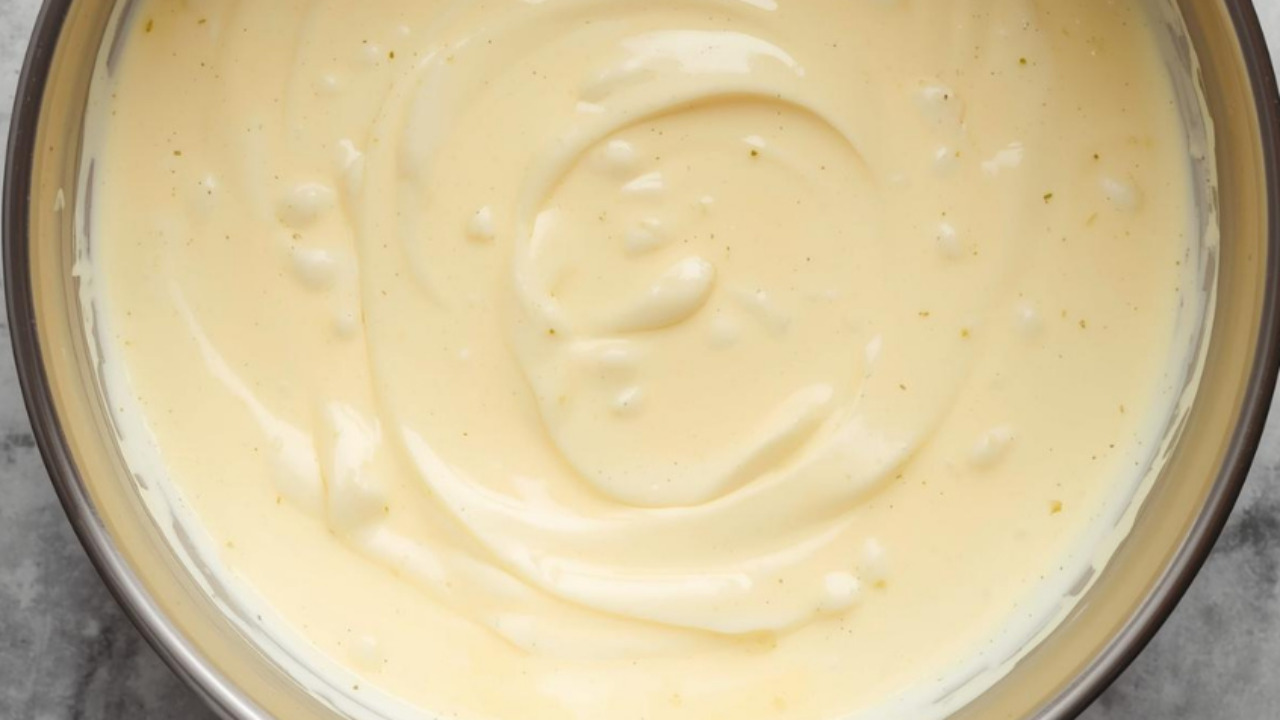
This easy white sauce, or béchamel if we are being fancy, is the one recipe that unlocks a hundred others. Cauliflower cheese, lasagne, mac and cheese, fish pie, leeks in white sauce, they all start here. The secret is adding the milk slowly, bit by bit, and not rushing it. Get that right and you will have smooth, creamy, lump-free sauce every single time. Let's cook!
Why This White Sauce Works
A proper lump-free béchamel in 20 minutes from three ingredients: butter, flour and milk. The difference between a silky sauce and a lumpy one is not skill, it is patience, because adding the milk in small amounts and beating each one in fully is what keeps it smooth. What makes this version different is infusing the milk with garlic, onion, thyme and peppercorns first, so you are building flavour in from the start rather than relying on seasoning at the end. This is one of the very first things I was taught to make properly in a professional kitchen, and after 20 years I still make it exactly this way.
Recipe Details
- Prep Time: 5 minutes
- Cook Time: 15 minutes
- Total Time: 20 minutes
- Makes: 500ml, enough for 4 to 6 servings
- Difficulty: Easy
- Special Equipment: Saucepan, whisk or wooden spoon, sieve
There are two steps people rush and both of them matter. The first is cooking the roux, that mix of butter and flour, for a full 2 to 3 minutes before any milk goes near it, because that is what cooks out the raw flour taste that otherwise makes a sauce taste pasty. The second is the milk itself, which goes in a couple of tablespoons at a time to begin with, beaten in completely before the next lot. It feels like it is taking forever. Do it anyway. Once you have added about half the milk you can be braver and go in bigger splashes, and from there the sauce comes together quickly.
Ingredients
For the White Sauce:
- 50g butter
- 50g plain flour
- 500ml whole milk
For Infusing the Milk:
- 1 clove garlic, bashed
- 1/2 small onion (no need to chop it)
- A few sprigs fresh thyme
- A small sprinkle of black peppercorns (about 5 or 6)
To Season:
- Salt and pepper, to taste
How to Make White Sauce
- Infuse the milk: Pour the milk into a small saucepan and add the bashed garlic clove, half onion, thyme sprigs and peppercorns. Place over a low to medium heat and warm gently for about 5 minutes. You do not want it to boil, just get it warm and let all those lovely flavours infuse into the milk.
- Make the roux: While the milk is infusing, melt the butter in a separate medium saucepan over a low heat. Once melted, add the flour and stir well with a wooden spoon or whisk. Cook this mixture, the roux, on low heat for about 2 to 3 minutes, stirring constantly. You want to cook out the raw flour taste without letting it brown, so keep it pale and blonde.
- Strain the milk: After 5 minutes of infusing, strain the milk through a sieve into a jug. Discard the garlic, onion, thyme and peppercorns, as you have all the flavour you need now.
- Add the milk slowly: This is the most important step. Add the infused milk to the roux a little at a time, starting with just a couple of tablespoons. Whisk or beat it in really well until completely smooth, then add another small amount. Keep going bit by bit, making sure each addition is fully combined before adding more. Do not be tempted to pour it all in at once, because that is how lumps happen.
- Keep whisking: As you add more milk the sauce will gradually loosen and become smoother. Keep whisking between each addition. It might feel like it is taking ages, but this patience is what creates a perfect, lump-free sauce.
- Add the remaining milk: Once you have added about half the milk and the sauce is looking smooth, you can be a bit braver and add larger amounts at a time. Still whisk well between each addition. Add all the remaining milk, whisking constantly.
- Bring it to a bubble: Once all the milk is incorporated, turn the heat up to medium and bring the sauce to a gentle boil, stirring constantly. You need to keep stirring to stop it catching and burning on the bottom. As it heats it will thicken up beautifully.
- Cook until thickened: Keep stirring and let it bubble gently for 2 to 3 minutes. The sauce should thicken to the point where it coats the back of a spoon. Run your finger through the sauce on the spoon, and if it leaves a clear line it is ready. The flour taste should be completely gone.
- Taste and season: Give it a taste. It should be smooth, creamy and have no raw flour flavour. Season with salt and pepper. If you are using this in a dish with other salty ingredients like cheese, go easy on the salt.
- Use or keep warm: Your white sauce is ready. If you are not using it straight away, press a piece of cling film or greaseproof paper directly onto the surface to stop a skin forming.
Why You'll Love This Recipe
- No lumps, guaranteed: Follow the slow milk method and you will get a smooth sauce every time.
- Infused with real flavour: Warming the milk with garlic, onion and thyme adds a depth you cannot season in later.
- The base for dozens of dishes: Cauliflower cheese, lasagne, mac and cheese, fish pie, moussaka, croque monsieur, vegetable gratins.
- Three ingredients: Butter, flour and milk. That is genuinely it.
- A skill for life: Learn this once and you will use it forever.
- Endlessly adaptable: Add cheese, mustard, herbs or mushrooms and it becomes a completely different sauce.
Chef's Tips for White Sauce
Keep the heat low when you infuse the milk: This is the one I really want you to hear. If the heat is too high the milk catches on the base of the pan, and once you burn milk you cannot get that flavour out of anything you use it in. Years ago in London I had 6 litres of milk infusing, walked away for what felt like no time at all, and came back to strain out the aromatics to find the whole lot completely burnt. I have never made that mistake again. Keep it gentle and stay with it.
Patience with the milk is everything: Small additions, beaten in fully, especially for the first half. This is the single most important thing for a lump-free sauce and there is no shortcut.
Cook the roux properly: Those 2 to 3 minutes of butter and flour together are what remove the raw flour taste. Skip it and the sauce will taste pasty no matter what else you do.
Use whole milk: Full-fat gives you the creamiest, richest sauce. Lower-fat milk works but the result is thinner and less satisfying.
Stir constantly once it is heating: As soon as the sauce comes up to temperature it will catch on the bottom if you stop moving. Keep the spoon going.
The spoon test tells you when it is ready: When the sauce coats the back of a spoon and holds a clear line where you run your finger through it, you are done.
Press cling film onto the surface: If it is sitting for any length of time, film directly on the surface stops a skin forming. Touching the sauce, not stretched across the pan.
Substitutions & Variations
- Cheese sauce (Mornay): Stir 100 to 150g grated cheddar, gruyère or parmesan through at the end until melted.
- Mustard sauce: Stir in 1 to 2 tablespoons of Dijon. Brilliant with fish or ham.
- Parsley or herb sauce: A good handful of chopped parsley, chives or dill at the end. Parsley sauce is the classic with fish.
- Garlic mushroom sauce: Sauté sliced mushrooms and garlic separately, then stir through the finished sauce.
- Dairy free: Use a dairy-free butter and oat or soya milk. Both work well.
- Add a bay leaf: Slip one in with the other aromatics while the milk infuses.
Storage
Best eaten fresh: White sauce is at its best made and used straight away, while it is warm, silky and at exactly the consistency you want.
Fridge: Keeps for up to 3 days covered, with cling film pressed directly onto the surface. Reheat gently in a saucepan over a low heat, whisking constantly, and add a splash of milk to loosen it back to the right consistency. If you only need it to hold for an hour, keep it over a very low heat with film on the surface.
Freezer: Freezes well for up to 3 months in portions. Defrost overnight in the fridge, then reheat gently and whisk hard, as it can look separated at first and comes back together with a good whisk.
Avoid: Do not reheat it fast over a high heat. It will catch on the bottom and split, and a burnt note will run through the whole batch. Low and slow with constant whisking every time.
Frequently Asked Questions
What is the difference between white sauce and béchamel? They are the same thing. Béchamel is just the French name for a white sauce made from a butter and flour roux with milk.
How do you get rid of lumps in white sauce? Push it through a fine sieve, or blitz it smooth with a stick blender. Both rescue it completely. Next time, add the milk more slowly and beat each addition in fully before the next.
Why does my white sauce taste floury? Either the roux was not cooked long enough, or the sauce never came to a proper bubble. Give the butter and flour a full 2 to 3 minutes, and let the finished sauce bubble gently for 2 to 3 minutes at the end.
My white sauce is too thick, how do I fix it? Whisk in more milk, a splash at a time, until it is where you want it. Too thin is the easier problem, just keep it bubbling gently and it will reduce and thicken.
Why has a skin formed on top of my sauce? That is just what happens when the surface is exposed to air. Stir it back in if it is fine, or press cling film directly onto the surface next time to prevent it.
What if my roux goes brown? The heat was too high, and ideally it stays pale and blonde. As long as it has not actually burnt you will just get more of a beurre noisette, nutty flavour in the sauce, which is honestly just as tasty in the right dish.
Do you have to infuse the milk? No, and the sauce still works with plain warm milk. But the aromatics add a real depth of flavour for about five minutes of effort, so it is worth it whenever you have the time.
What can you use white sauce for? Cauliflower cheese, lasagne, mac and cheese, leeks in white sauce, fish pie, chicken and mushroom pie, moussaka, croque monsieur, and any vegetable gratin. Add cheese and it becomes a Mornay, which covers most of those on its own.
Can you make white sauce ahead of time? Yes, up to 3 days ahead in the fridge or 3 months in the freezer. Reheat gently with a splash of milk and whisk it well to bring the texture back.
What if I do not have a whisk? A wooden spoon is completely fine, and it is what I learned on. You just have to beat the mixture properly after each milk addition rather than stirring it lazily.
You Might Also Like
Kale and Potato Bake - This white sauce doing exactly what it does best, under a golden cheese top.
The Ultimate Fish Pie - A proper comfort dinner built on a good béchamel and topped with mash.
Easy Veggie Pasta Bake - A budget-friendly fridge-raid bake where a quick white sauce pulls everything together.
White sauce is one of those foundational recipes that quietly makes you a better cook, because once you can make it properly a whole set of dishes opens up. Butter, flour and milk, a few aromatics, and a bit of patience with the whisk. Cook the roux out, add the milk slowly, keep the heat gentle, and you will get a smooth, glossy sauce that coats the back of a spoon exactly as it should. Add cheese for cauliflower cheese, mustard for fish, herbs for a parsley sauce, and you have three more dinners from the same 20 minutes.
Enjoy!
Del x
Butter, flour, milk and a bit of patience, and you have a silky lump-free béchamel for life.
Join the Dishes with Del community.
Stay in the loop with new recipes, exciting announcements, anything to keep you away from the washing up!
No spam here. Just tasty recipes!